
How Mindfulness Helps Reduce Anxiety and Overthinking
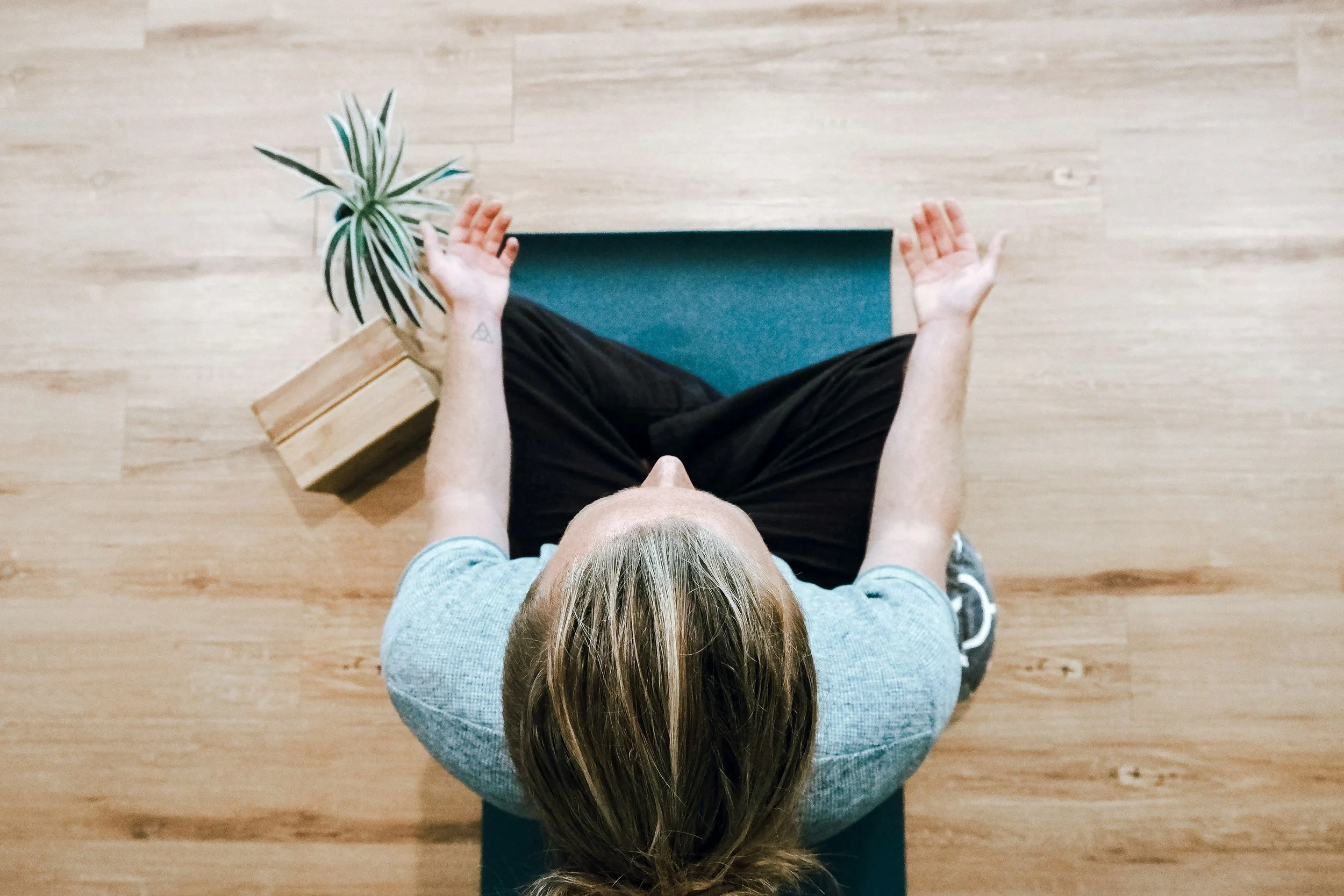
When people hear the word mindfulness, they sometimes imagine something soft, abstract, or removed from real life.
But mindfulness is not about pretending life is peaceful when it is not.
It is about learning how to meet your own mind more skillfully.
That matters when you are anxious. It matters when you overthink. And it matters especially when your mind has developed the habit of staying switched on, scanning for problems, replaying conversations, or trying to solve everything at once.
For many professionals, that pattern becomes so normal that they no longer notice how much inner friction they are carrying.
Mindfulness helps because it changes your relationship with that friction.
Studies summarized by the APA and NHS note that mindfulness can help with stress and anxiety, while research reviews have found that mindfulness-based interventions are associated with reduced anxiety symptoms, lower emotional reactivity, and improved regulation. At the same time, not every study shows mindfulness outperforming active controls, and it is not equally helpful for everyone. That is the honest and useful middle ground.
What mindfulness actually means
Mindfulness is the practice of paying attention to your present experience with more awareness and less automatic judgment.
That sounds simple. In practice, it is powerful.
Because anxiety and overthinking thrive on automaticity.
They pull you into loops:
replaying what already happened
anticipating what might happen
trying to control outcomes before they arrive
mistaking mental activity for useful action
Mindfulness interrupts that pattern by helping you notice:
what your mind is doing
what your body is holding
what emotion is present
what story you are telling yourself
whether your thoughts are actually helping
This shift from being inside every thought to observing the mind more clearly is one of the reasons mindfulness can feel relieving.
Why mindfulness helps anxiety
Anxiety is often future-oriented. The APA describes it as a long-acting response focused on diffuse future threat.
Mindfulness brings attention back to what is here now.
That does not mean it solves every problem. It means it reduces the mind’s tendency to live too far ahead of reality.
When you are anxious, your system often behaves as though every possibility needs immediate rehearsal. Mindfulness helps create a gap between the first worried thought and the full spiral that usually follows.
That gap matters.
Inside that gap, you are no longer only reacting. You begin choosing.
Research reviews have linked mindfulness practice with reduced psychological symptoms, lower emotional reactivity, and improved behavioral regulation, which helps explain why it can be useful for people dealing with anxiety.
Why mindfulness helps overthinking
Overthinking often looks intelligent from the outside.
It can seem like preparation. Thoroughness. Responsibility.
But many forms of overthinking are not actually clarity. They are mental over-engagement without resolution.
The mind keeps circling because it does not feel safe enough to stop.
Mindfulness helps reduce overthinking by teaching you to recognize when thought has stopped being productive.
Instead of asking, “How do I think my way out of this completely?” mindfulness asks, “What is happening in me right now, and what actually needs attention?”
That shift can reduce:
rumination
mental looping
emotional amplification
the pressure to solve everything at once
It also helps you notice when you are trying to think your way out of a feeling that first needs to be felt, named, or calmed.
Mindfulness is not about having no thoughts
This is where many people misunderstand the practice.
Mindfulness is not the absence of thought.
It is the ability to notice thought without being dragged by every one of them.
A mindful person does not have a perfectly empty mind. They simply become less fused with every fear, interpretation, or worst-case scenario that passes through.
That is an important distinction, especially for high-functioning people who believe they are failing at mindfulness because their mind remains busy.
A busy mind is not failure. It is the material of the practice.
It helps calm the body, not just the mind
Anxiety is not only cognitive. It is physiological.
You may notice it as tightness in the chest, shallow breathing, restlessness, jaw tension, fatigue, or a body that does not seem to fully come down from alertness.
This is why purely intellectual reassurance often does not work well on its own.
Mindfulness practices, especially those involving breath, grounding, and present-moment awareness, can help regulate your state more directly. The APA notes that mindfulness meditation has been shown to change the brain and biology in ways that can improve mental and physical health, and WHO lists mindfulness skills among stress-management skills that can help reduce symptoms of anxiety disorders.
This is also why mindfulness often feels more practical than people expect. Sometimes the most important shift is not a new idea. It is a calmer nervous system.
What mindfulness looks like in real life
Mindfulness does not have to begin with long meditations or a perfect morning routine.
In real life, it can look like:
noticing your breathing before opening your laptop
catching the moment your mind starts racing ahead
pausing before reacting to an email
realizing your body is tense before your thoughts admit it
stepping out of a mental spiral before it becomes your whole evening
letting a thought pass without turning it into a full internal argument
This is why mindfulness fits so naturally into coaching work. It is not only something you “do” during meditation. It is a way of becoming more aware in the moments that usually run you automatically.
Why mindfulness does not always feel easy
Because awareness is honest.
And honesty can feel unfamiliar when you are used to staying busy, staying productive, or staying mentally ahead of everything.
Sometimes mindfulness shows you how tired you are.
Sometimes it reveals how tense you have been for a long time.
Sometimes it makes clear that the mind is not simply busy. It is overburdened.
That can be uncomfortable at first.
The NHS notes that mindfulness is helpful for many people, but not everyone finds it helpful, and for some it may even make them feel worse. That is one reason mindfulness should be approached practically and thoughtfully rather than romantically.
So the goal is not to force yourself into a rigid practice. The goal is to find a grounded, realistic way of building awareness that supports your life. You can start with some of the most mundane moments of your day into moments of mindfulness with practice.
What mindfulness can and cannot do
Mindfulness can help you:
notice anxious patterns earlier
reduce reactivity
create more space between thought and response
become less entangled in overthinking
feel more present and steady
relate to yourself with more clarity
Research reviews support these general benefits, especially around anxiety, stress, emotional regulation, and psychological wellbeing.
What it cannot do is make you immune to pressure, uncertainty, or emotion.
Mindfulness is not a magic shield. It is a skill.
And like any meaningful skill, it works best when practiced consistently and applied intelligently.
Why it matters for professionals
Professionals often live inside a high-cognitive mode.
They think quickly. Solve constantly. Carry responsibility. Anticipate problems. Stay mentally engaged long after the workday ends.
That can create external success while quietly exhausting the internal system.
Mindfulness matters here because it restores a quality that high-pressure environments often drain first: inner steadiness.
It helps you return to the present instead of living only in performance, urgency, and mental carryover.
And from there, better decisions tend to follow.
Not because you have become passive. Because you have become less internally scattered.
How I use mindfulness in coaching
At The Calm Mind, mindfulness is not treated as something decorative or mystical.
It is used as a practical way to help clients become more aware of their patterns, calm mental overload, and rebuild clarity from the inside out.
That may include:
awareness of thought loops
grounding tools
reflective pauses
breath-based regulation
noticing triggers earlier
learning how to return to the present with more steadiness
converting mundane or ordinary moments of the day into moments of grounding
For many people, this becomes the turning point.
Not because life gets instantly easier, but because they stop meeting every internal wave with more panic, more pressure, or more thought.
A more useful way to think about mindfulness
Mindfulness does not remove every anxious thought.
It changes the amount of authority you give it.
It does not guarantee that the mind will never race.
It helps you come back sooner.
It does not erase difficulty.
It gives you a steadier way to meet it.
And for many people, that is where relief begins.
When support can help
If you have tried to manage anxiety and overthinking on your own but still feel mentally tired, constantly switched on, or unable to settle, support can make the practice more personal and more effective.
You do not always need more information. Sometimes you need a clearer space in which to apply it.
If that is where you are, you can explore Mindfulness Coaching, Stress & Anxiety Coaching, or Book a Free Clarity Conversation.
FAQ - About Mindfulness
Does mindfulness help anxiety?
For many people, yes. Authoritative sources including the APA, NHS, and WHO note that mindfulness can help reduce stress and anxiety symptoms, and research reviews support benefits for anxiety and emotional regulation. Results vary by person and by the type of comparison used in studies.
Can mindfulness reduce overthinking?
It can help reduce overthinking by increasing awareness of mental loops and creating more space between thoughts and reactions. This is an evidence-informed inference based on mindfulness research showing reduced reactivity and improved regulation.
Is mindfulness the same as meditation?
Not exactly. Meditation is one way to practice mindfulness. Mindfulness can also be practiced in ordinary moments through awareness of breath, body, thoughts, and reactions.
What if mindfulness feels difficult?
That is common. Mindfulness is not about having a blank mind. It is about noticing what is happening without immediately being taken over by it.
Can mindfulness replace therapy or medical care?
Not always. Mindfulness can be valuable, but it is not a replacement for therapy, psychiatric care, or medical support when those are needed.
If your mind feels constantly switched on, mindfulness may need to become more practical, not more perfect.
Explore Mindfulness Coaching or Book a Free Clarity Conversation with Ashish Singh at The Calm Mind.